If you’re a fan of the early days of NYC, you need this new book by Legs McNeil
[This was my weekly column for GlobalNews.ca. – AC]
Fifty years ago, a series of events on both sides of the Atlantic conspired to give birth to a new strain of rock that was paradoxically both revolutionary and reactionary. It was branded as “punk rock.” Over about 12 months, it demonstrated an aesthetic, an attitude and a sense of fashion, although punk split into two distinct flavours. In the U.K., punk was political, an assault on the class system and sometimes violent. But in New York, it was more art than angst. More than a few poets, writers and painters were part of that original scene.
NYC punk’s epicentre back then was CBGB, a former biker bar on the ground floor of a flophouse hotel filled with the broken, addicted and indigent. From a small scene that began coalescing in late 1973 and early 1974, many a legend was born. Together with Britain’s spin on things, the punk of 1976 was the Big Bang for the creation of what we now call “alternative rock.”
Legs McNeil was a sub-100 lb teenager who was there. He’s chronicled things for years, starting with a ‘zine called Punk (more on that in a moment) along with a series of books, most notably Please Kill Me a 1996 oral history of the era co-created with Gillian McCain. It’s a must-read for anyone interested in music history.
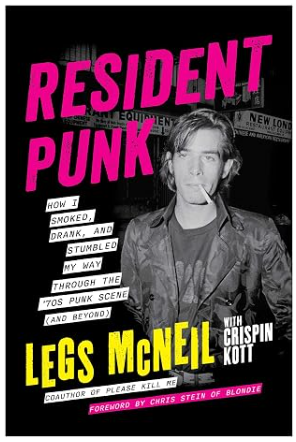
Legs’ new book is Resident Punk: How I Smoked, Drank, and Stumbled My Way Through the ’70s Punk Scene and Beyond. I had a chance to speak with him about it.
Alan Cross: How would you describe this book?
Legs McNeil: I hated being labeled a music journalist. I still hate it. I never wanted to be a rock critic. I wanted the people who actually did it, who were in the room, to tell the story. And I did that. It’s snapshots. I thought I’d put down different snapshots of my life, like Polaroids. I thought of it as taking Polaroids. Remember, people used to take Polaroids in the ’70s and that was all the rage. Andy Warhol used to take them all the time. And I thought, Oh, I’ll just write little Polaroids.
Alan Cross: Can we agree, more or less, that 1976 is the beginning of what the public would call punk rock?
