Ongoing History Daily: The jukebox
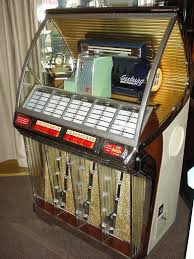
If you’re of a certain age, you’ll remember the old-style non-digital jukebox. They used to be in bars and restaurants everywhere. It was usually a big metal-and-plastic-and-glass box more than half the size of a refrigerator, made by companies with names like Wurlitzer and Seeburg, that was essentially a coin-operated record player.
A typical jukebox could hold (at most) a couple hundred seven-inch singles. A single play of a song used to cost a nickel, then a dime and maybe three for a quarter. They were big, clunky, needed lots of servicing, and really didn’t sound all that good because the speakers tended to be terrible and could only reproduce music in mono. But in the era before personal music devices, they were tremendously popular, responsible for millions of dollars in revenue for operators, record labels and publishers. For example, the first music charts were largely based on the number of jukebox plays a record got.
Now these old machines are highly collectible and often sell for thousands upon thousands of dollars.